
Showing Every Cup: The Significance of Representation in Bra Advertising
Words and Article Banner by Jupiter Morta
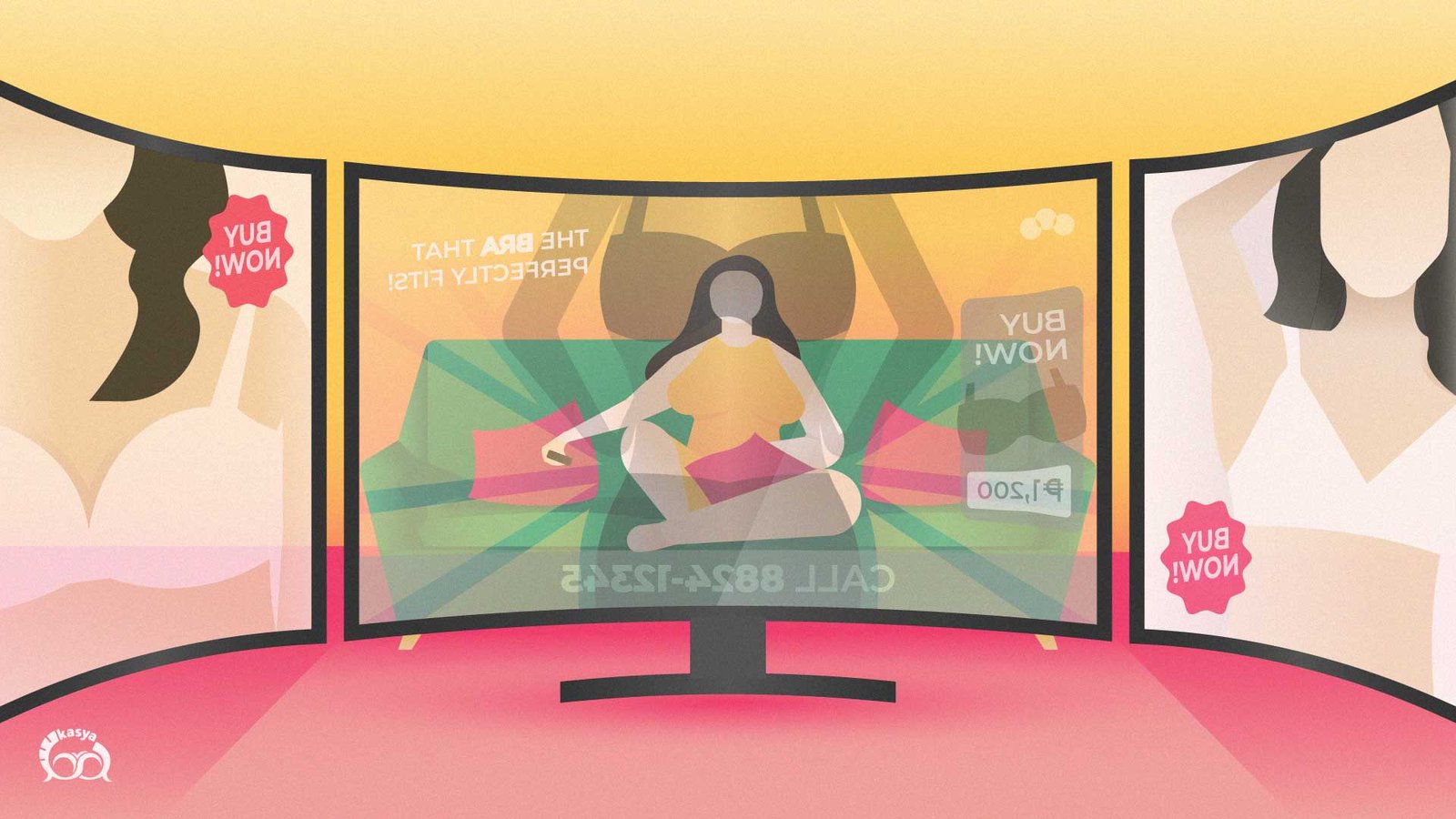
A sense of belonging is a human emotional need for support, inclusion, and acceptance within a group.
This can be experienced in many different ways, such as gaining support from family and friends, forming relationships with others, showing your true self without the fear of negative judgement, and more.
Having this sense of belonging can lead to feelings of comfort, safety, and freedom, and can even improve one’s social skills and personal motivation.
But when you look around—particularly at the products advertised to you—do you feel accepted and included as you look at them?
The Power of Advertising
Advertising is a powerful tool that shapes individual understanding and societal norms, through its potential to influence how individuals view themselves and others from a psychological perspective (Pollay 1986; Schroeder and Borgerson, 1998).
This suggests that advertising does not only persuade the public to buy a product or service, but it also alters how consumers act, feel, and think about themselves.
People from the marketing and advertising industry have been using pictures and adverts, frequently photoshopped and airbrushed, of romanticized, perfect women for years to promote their goods.
This creates unattainable beauty standards and stereotypical societal views that make many women unattractive and anxious about their looks and how they are portrayed in public (Pandora, 2023).
In the UK, there is abundant research that shows these ‘perfect’ images impact our perception on what is ‘normal’ and desirable, creating unrealistic, harmful, and unattainable beauty ideals, as stated by King (2021).
Data suggests that negative psychological effects can arise when consistently exposed to idealized images of women in advertising.
This includes, but is not limited to, increased body discontent, self-objectification, and internalization of the thin ideal (Bessenoff, 2006; Dittmar and Howard, 2004; Grabe et al., 2008).
That said, the exclusion of women who fall outside typical beauty standards in advertising results in them becoming more concerned and self-conscious.
They don’t see themselves reflected in ads that present certain looks as “perfect” or “ideal”—and of course, all of us want to feel attractive in some way.
This also diminishes women’s sense of belonging in society, as they may begin to see themselves as unattractive, unaccepted, and unappreciated in the eyes of the world.
Especially when they are constantly bombarded with ads that promote narrow, idealized beauty standards.
Advertising in the Bra Industry
Historically, the fashion industry’s portrayal of body image has been monolithic.
From the curvaceous figures celebrated in Renaissance art to the flapper era’s androgynous looks and the ultra-slim silhouettes of the late 20th century, the fashion world always had a ‘preferred’ body type (_&CIRCUS, 2023).
This led fashion brands—especially those that sell bras—to recruit models who fit beauty standards to promote their products, driven by the belief that “thin sells.”
But as the world constantly changes, through the years, society has become more open, accepting, and breaking the old norms.
Several international lingerie brands have also promoted inclusivity by featuring a wide range of body types in their ad campaigns, giving equal attention to above-average bust sizes.
A research conducted by The Stereotype Alliance (2024) proves that inclusive advertising results in an improvement on sales, financial performance, customer preference and loyalty, brand equity, and market competitiveness.
It confirms that inclusive advertising delivers: 5% higher shorter-term sales, 16% higher long-term sales, 62% higher chance of being a consumer’s initial choice, and 15% higher customer loyalty.
Bra Advertising in the Philippines
Olegario (2022) asserts that over the years, body positivity as a movement and philosophy has been promoting the idea that all body types, sizes, and shapes deserve appreciation and respect.
As the women population of the Philippines possess breast sizes that vary widely, bra sizes that accurately reflect individual breast sizes can not only provide better support and reduce discomfort, but also boost a woman’s confidence and body image.
Although there is already a wide variety of bra products from both Filipino and international lingerie brands in the Philippine market, women with above-average bust sizes still face persistent barriers in accessing affordable and size-inclusive bras.
According to World Population Review (n.d.), AA is the average cup size of Filipino women. As a result, the local market prioritizes smaller sizes for mass-market profitability, leaving women with above-average busts underserved (Morta et al., 2025).
Viray (2024) found that Filipino plus-size women aged 18-50 were generally discontented with the present situation of local plus-size fashion, frequently encountering issues related to clothing fit, limited style availability, and high prices, as well as negative body image perceptions linked to their clothing experiences.
Because the demand for affordable and accessible bras for plus-size women has been downplayed, local and international stores in the Philippines provide little to no advertising for plus-size bras, further limiting their representation in media.
Morta et al. (2025) found a significant disconnect between product inclusivity and how major lingerie brands in the country present themselves.
Although many brands provide a wide range of sizes, this inclusivity is rarely reflected in their advertising.
This aligns with the study results showing that nearly 3 out of 10 women with a bust size of 32D or larger feel insecure while shopping due to the lack of representation in bra advertising.
As a result, inclusivity tends to exist only as a product option rather than a deliberate part of their branding.
In a time when the world is becoming more open to embracing people regardless of how they look, we are on the right path toward a more positive and inclusive environment where we can truly feel a sense of belonging.
We must continue making efforts to uplift women rather than forcing them into unrealistic and unattainable ideas.
The journey toward a more accepting, supportive, and inclusive world has come a long way—but there is still more to go.
References:
Morta, J., et al. (2025). All Sizes Matter: Accessibility, affordability, and representation of plus-size bras for women in the Philippine market through consumer perception and retail availability. (2025). Undergraduate research paper, De La Salle College of Saint Benilde.