
The Business Side of Stock Inclusivity
Words by Liz Oandasan
Article Banner by Helen Pajutagana
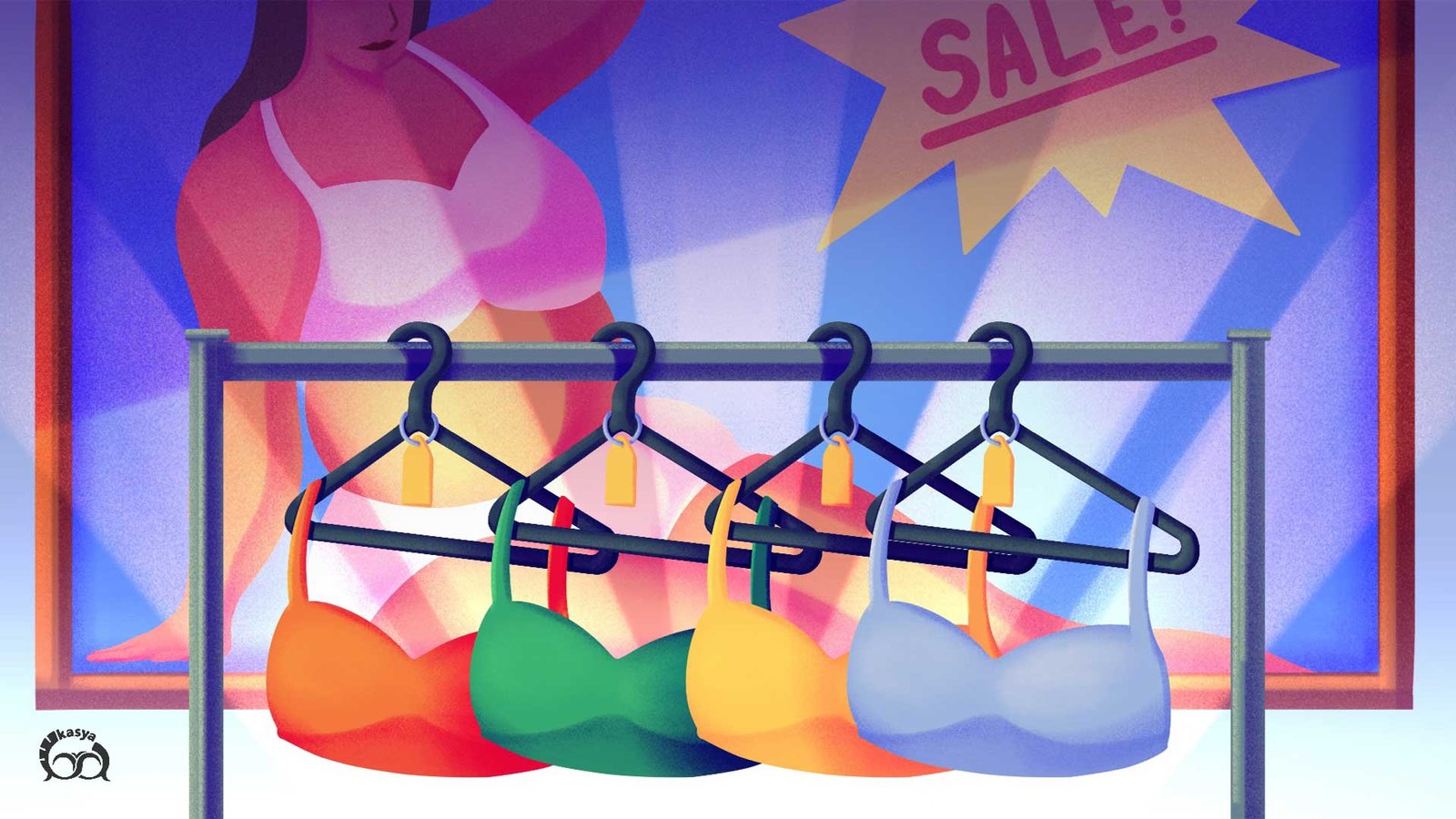
When it comes to lingerie, many Filipinas know the struggle of walking into a store, seeing racks of pretty bras, and realizing most of them aren’t for them.
Having a pretty face and aesthetics have always been the priority for brands for many years. But as more women speak up about inclusivity and comfort, the industry is starting to feel the pressure to change. Not just in looks, but their principals.
This article takes a closer look at how two well-known brands, Avon® and Triumph®, approach size inclusivity in the Philippines.
Through interviews with Karla Villanueva, Sales Leader of Avon Cosmetics Inc. (Las Piñas Branch), and Angelita O. Arbas, Technical Manager of PR Busana Remaja Agracipta (Triumph Indonesia), we explore how both brands handle product design, availability, marketing, and representation.
Design That Fits Filipinas
For Avon®, inclusivity begins with listening to the consumers. Villanueva shared that the brand focuses on comfort, support, and adaptability for women with fuller busts.
Their designs include wider straps, stronger underbands, breathable fabrics, and multiple hook closures for better support.
They have concluded these and considered the feedback of their consumers. In result, came the popular 360° Comfort Bra that reflects this idea. A simple, functional, and made for every kind of woman.
Triumph®, on the other hand, focuses more on the technical side of production.
Arbas explained that their design process follows strict manufacturing standards and focuses heavily on cup construction and wiring.
However, she admitted that in the Philippines, plus-size production is often limited because of the lower demand for it.
A report by Euromonitor International (2023) found that many lingerie designs used locally still follow Western body proportions.
This highlights the core problem as their consumers do not fit their products. It is not meant for Filipinas, hence the majority do not fit right.
It shows how important it is for companies to do local test fitting and create products that better match their customers.
Stocking and Accessibility
Working on being inclusive starts with what brands can offer and what is available in-store.
Villanueva said one of Avon®’s biggest challenges is keeping the right sizes in stock. Popular cup sizes often sell out quickly, leaving what she called “broken sizes.”
Arbas shared that Triumph® aims to keep a balance between smaller and larger sizes but admitted that many stores still stock mostly small to medium sizes.
Backed with a study by the Philippine Retailers Association (2023) revealed that most lingerie stores in Metro Manila prioritizes smaller sizing, leaving D cups and above with lesser options as the majority of Filipinas are assumed to be smaller-cupped.
While online shopping is an option, women are more inclined to seek physical stores as the risk of gambling with sizes are higher when shopping online.
This creates a cycle where plus-size options remain unseen, and brands think there is no market for them, when in truth, many women are just not given the option to choose.
Representation and Marketing
Representation plays a huge role in how women see themselves. Villanueva explained that Avon® uses real women and plus-size models in campaigns such as Everybody for Every Body and Join the Boobment.
These campaigns aim to show that all body types deserve visibility and comfort. However, she also admitted that it takes time to change how people view beauty and that many still expect “ideal” figures in ads.
In comparison, Arbas shared that Triumph®’s global campaigns are more inclusive, but the brand’s local marketing still relies on traditional beauty standards: slim, light-skinned, and youthful.
Few of its Philippine stores highlight plus-size representation in their visuals.
Reports from Rappler Lifestyle (2022) and Genete (2014) support this observation, showing that local lingerie ads still mostly feature thin and fair-skinned models.
This kind of repetition in media can affect how women see themselves, shaping what they believe is considered “normal” or beautiful (Goffman, 1974).
Price and Consumer Access
With accessibility also comes consumer affordability. It is not enough that there are available products catered for bigger bust women if they, themselves cannot afford them.
A study by Morta et al. (2025) found that while brands like Avon®, Triumph®, and Wacoal® offer extended sizing, these products are often harder to find and cost more than standard ones.
Similarly, a survey by Melon Na! Kasya Bra’s partner study on plus-size accessibility in the Philippines, concluded around 60% of respondents settle for smaller or uncomfortable bras because their real size is unavailable or too expensive.
Most of these women belong to the lower- and middle-income brackets, with preferred prices ranging from ₱500 to ₱1,500.
In this range, brands like Avon® and Bench Body® are more accessible, while Triumph®, Wacoal®, and Marks & Spencer® are considered premium.
Villanueva explained that keeping prices fair is essential in earning consumer trust, saying women should not have to “fix themselves” to fit the product.
Between the two brands, Avon® currently leads in inclusive representation and accessibility, while Triumph® continue to improve but still have gaps.
This reflects findings by Vogts (2021), who noted that media and marketing play a major role in how women feel about their bodies and whether they feel welcome as consumers.
The Road Ahead
Both Villanueva and Arbas agree that inclusivity should go beyond words. For Avon®, this means continuing to involve real consumers in the design process and expanding campaigns that build confidence and awareness about fit and body care.
Triumph®, meanwhile, sees the need to adapt more to the local market and ensure better stock diversity in Philippine stores.
According to Kantar Philippines (2024), brands that prioritize inclusivity and comfort will likely gain stronger customer loyalty, especially among women aged 25 to 45.
With the lingerie market expected to grow by 5.4% every year until 2031 (6Wresearch, 2024), inclusivity is not just good ethics, it is good business.
Inclusivity is more than just offering bigger sizes, especially in lingerie, it is about making every woman feel seen, supported, and comfortable in her own skin.
The cases of Avon® and Triumph® showed the progress of their brands moving forward; however, there is still work to be done in making it better, better suited, and represented for all women.
As more Filipinas demand comfort and awareness, the brands that truly listen will stand out. Because at the end of the day, real inclusivity is not a trend, it is respect for all women.
No matter the shape, size, and their story to tell, there should not be a need for the time to ask kung kasya ba?
References:
6Wresearch. (2024). Philippines lingerie market size, share, and forecast 2031. Retrieved from https://www.6wresearch.com
Euromonitor International. (2023). Lingerie in the Philippines. Retrieved from https://www.euromonitor.com
Genete, J. A. (2014). The stereotyped versus the empowered: The Filipina image in local billboard ads. Academia.edu. Retrieved from https://www.academia.edu/10043184
Kantar Philippines. (2024). Fashion consumer trends in the Philippines. Retrieved from https://www.kantar.com
Morta, J., et al. (2025). All Sizes Matter: Accessibility, affordability, and representation of plus-size bras for women in the Philippine market through consumer perception and retail availability. (2025). Undergraduate research paper, De La Salle College of Saint Benilde.
Philippine Retailers Association. (2023). Retail inclusivity and the Philippine apparel market. Retrieved from https://www.philretailers.com
Rappler Lifestyle. (2022). Why local lingerie ads still lack body diversity. Retrieved from https://www.rappler.com/life-and-style Tichenor, P. J., Donohue, G. A., & Olien, C. N. (1970). Mass media flow and differential growth in knowledge. Public Opinion Quarterly, 34(2), 159–170.
Vogts, A. (2021). Body image and media representation in fashion advertising. Journal of Media and Communication Studies, 13(3), 45–58.
This is insightful.
Yes po ms!