
What the Male Gaze Stole from Us
Words and Article Banner by Ella Oreta
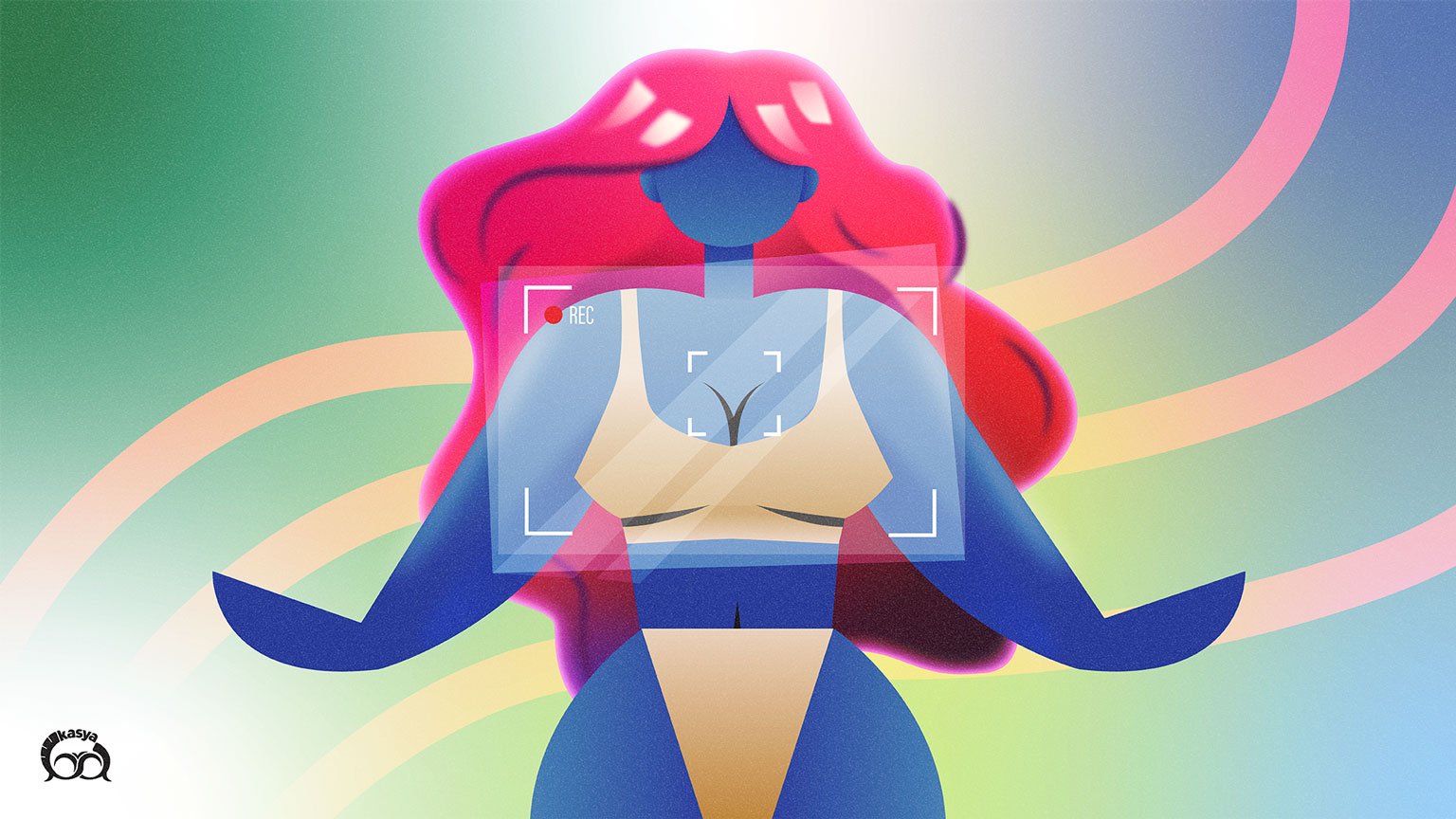
It’s strange how something as natural as a pair of breasts can turn you into a target. They’re just body parts, but the world doesn’t see them that way.
Society turns them into symbols of sex, morality, maturity, and even worth.
According to a 2016 Philippine Daily Inquirer report 70% of Filipino women have experienced harassment in public spaces—many of them when they were still just girls.
Puberty may be starting earlier around the world, but the way society reacts hasn’t evolved at all. Girls are still sexualized long before they’re old enough to understand what’s happening to them.
The male gaze is defined as a feminist theory describing how visual arts, media, and literature often portray the world and women from a masculine, heterosexual perspective, objectifying women for the male viewer.
The theory created by feminist film critic Laura Mulvey in 1975 suggests that this perspective frames female characters and bodies as passive objects to be looked at, satisfying male pleasure and desire.
The gaze is what trains men to desire what culture glorifies: breasts as fantasy, currency, and proof of maturity. And for women, it created a double bind. We are deemed indecent if we show our bodies, yet insecure if we hide them.
Almost every woman has fallen victim to the male gaze. We are constantly catcalled on the street for simply wearing a tank top, walking alone, or existing without apology. But it doesn’t stop there.
It follows us home, creeping into classrooms, offices, and even relationships.
In a patriarchal world, affection can start to feel like surveillance. When a compliment becomes a warning, when love turns into control, and when being seen no longer feels like being valued, but being watched. A low neckline becomes a reason for jealousy.
Studies show men with higher “hostile sexism” scores are more likely to control what their partners wear or who they talk to (Glick & Fiske, 1996). A compliment from another man becomes a “betrayal”.
And just when we feel like we’ve had enough, the very industries that claim to make us feel confident in our bodies prove they’re on the patriarchal side, too.
The lingerie and fashion industry capitalize on the sexualization of breasts; promising empowerment while selling insecurity. The global lingerie market is worth over $80 billion, yet most designs still cater only to cup sizes A through C.
In the Philippines, bras above 36C are rare and often priced two to three times higher.
What a contradictory world we live in, one where a woman walks into a store and hears “we don’t carry your size,” realizing the irony of paying more just to feel comfortable.
In the workplace, we see the male gaze in an even scarier lense.
Authority is used as a weapon with supervisors or colleagues threatening to leverage promotions, evaluations, or job security to manipulate and intimidate women.
Sexual harassment, whether through comments, unwanted touches, or suggestive jokes, is rarely about attraction; its about control.
Women are degraded for their appearance, attire, or behavior while men’s actions are shrugged off as harmless or excused with “he didn’t mean it.”
Microaggressions, dismissals, and constant scrutiny reinforce the same message women experience on the street: their bodies exist for others’ approval and their voices are secondary.
The environment forces women to shrink themselves, walk on eggshells, and adjust how they speak, act, or even dress to avoid scrutiny, all while their competence and authority are questioned.
Workplace harassment mirrors the male gaze in media, with men occupying the central role while women are relegated to supporting characters, props, or obstacles in someone else’s story.
But hey, what can we do? After all, “boys will be boys,” right?
It’s the same excuse the world has been using for generations. The same gaze that sexualizes women also excuses harassment and assault.
From catcalls to coercion, men justify their behavior by claiming they “couldn’t help it.” What’s worse is that everyone else has been conditioned to justify it too.
Women are told to cover up, to expect attention, to take responsibility for men’s lack of control. Sexual abuse is framed as a “misunderstanding,” not an act of domination.
When women speak up, its seen as an exaggeration, seeking attention, or ruining someone’s reputation. When we stay silent, we’re blamed for not doing enough to protect ourselves.
There’s no winning in a system designed to make us lose.
Generations of women have learned to shrink themselves, to laugh off comments, to walk faster, to carry keys between their fingers, all because the world refuses to teach men not to harm us.
The burden of safety, like the burden of shame, always falls on us.
Just how ironic is it that we’re the ones forced to adjust? How uncanny is it that the very thing they objectify is the same thing that gives them life?
Breasts feed children, anchor health, and symbolize strength—yet society only sees sex.
They forget that these bodies are not built for their fantasies but for our (including men’s) survival.
They forget that behind every chest is a heart, a story, and a woman begging to just exist and be seen behind that chest without apology.
We spend years unlearning the shame the world teaches us to carry and learning that our worth isn’t measured by how desirable we are in the eyes of a man.
Enough is enough. The world has framed women in a story written for men. Every glance, every comment, every expectation reduces us to background, props, or prizes.
Our bodies are treated like stages for their fantasies, while our worth is measured by how well we fit into their plot. Men see women as characters to be controlled, watched, or possessed.
The problem is not our bodies. This is the very thing that the male gaze stole from us: it stole our right to be whole, to be seen, and to live without being reduced to a prop in someone else’s story.